Read charts with context, structure and a clear plan.
Start with context
Identify the instrument, trading session and timeframe before studying a pattern. A chart is a view of past activity, not a guarantee of what happens next.
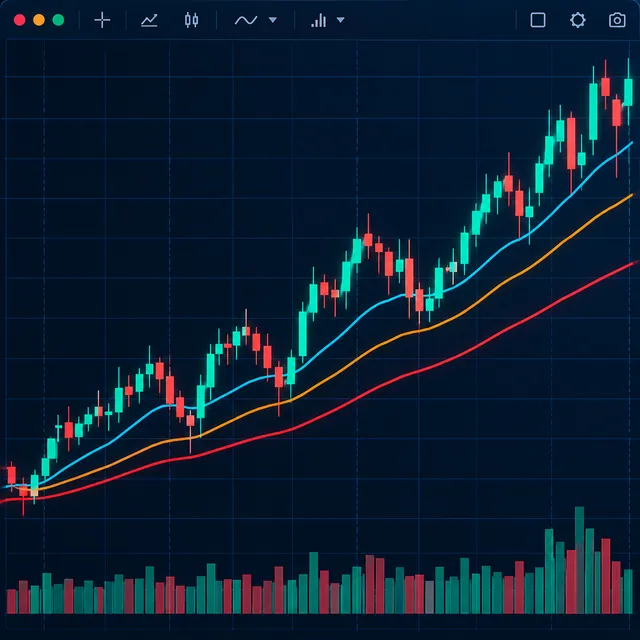
Read the structure
Compare highs, lows and areas where price has paused. Treat levels as areas to investigate, and consider more than one possible outcome.
Write a plan
Record your hypothesis, risk limit and invalidation condition. Review the outcome and the quality of the process separately.
Understand position size, uncertainty and consistency.
Define your limits
Decide what you can afford to risk before considering a trade. Keep essential funds separate and avoid treating a possible profit as a promised result.
Understand exposure
Exposure depends on contract size, price, leverage and correlated positions. Review the product specification and costs before placing an order.
Review consistently
Use a journal to review decisions, execution and conditions. Consistency means following a considered process, not expecting every trade to succeed.
Use AI as a research aid and check its limitations.
Ask a clear question
Provide the instrument, timeframe and purpose of your research. Ask for assumptions and alternatives rather than an unconditional prediction.
Verify the sources
Check dates, sources and calculations against reliable material. AI can generate errors or overlook context, even when its answer sounds confident.
Keep control
Use the output to support your review, not to bypass it. Keep risk decisions, account access and sensitive information under your own control.




 Beginner
 Intermediate
 Advanced